
Hanoi to Halong & Beyond: The Smart Traveler’s Guide to Long-Distance Comfort
Vietnam is geographically deceptive. Looking at a map, the distance from Hanoi to Halong Bay or Ho Chi Minh City to Mui Ne seems short. But in reality, these are 3-4 hour journeys.
When planning intercity travel (traveling between provinces), most visitors fall into a common trap: they focus only on the destination and forget about the journey.
You have two standard options: Suffer through the rigidity of public buses/trains, or… what?
In this guide, we analyze the “Comfort vs. Cost” spectrum of long-distance travel in Vietnam. We look at why taking a traditional taxi might bankrupt your travel budget, why private charters are a luxury, and how platforms like Dichung offer the perfect “middle ground” solution.
Part 1: The “Economy” Struggle (Public Bus & Train)
Let’s look at the traditional “Budget Option.” It is authentic, yes. But for a traveler with luggage and a tight itinerary, it comes with hidden costs—both in money and energy.
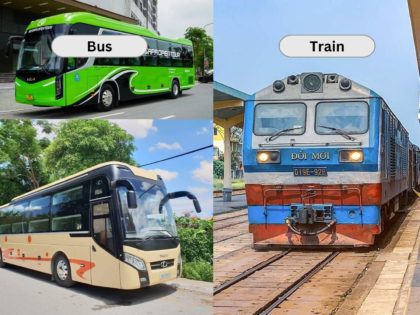
The “Station Shuffle”
Public transport doesn’t come to you; you go to it.
- The Reality: It’s 35°C (95°F). You drag your suitcases over uneven sidewalks to find a taxi. You sit in traffic to get to a chaotic bus station far from the city center (like My Dinh in Hanoi or Mien Dong in HCMC).
- The Hidden Cost: By the time you pay for the taxi to the station and the taxi from the station to your final hotel, the “savings” start to disappear.
The Rigidity
- The Schedule: The bus leaves when it wants (or when it’s full). It stops at fixed points on the highway, often miles away from your actual resort or homestay.
- The Experience: Legroom is often tight for international travelers. Privacy is non-existent. It gets the job done, but you arrive exhausted.
Part 2: The Two Extremes (Traditional Taxi vs. Shared Limousine)
If you decide to skip the bus and go by car, you generally face two extreme options. Let’s analyze why neither is perfect for the average traveler.
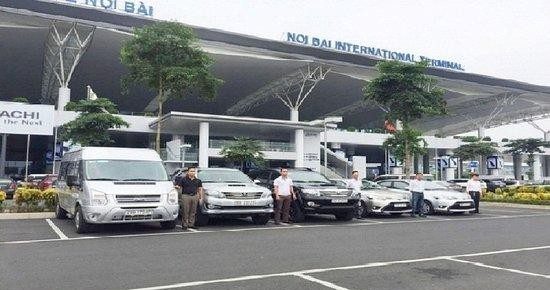
Option A: The Traditional Meter Taxi
- The Scenario: You flag down a taxi (Vinasun/Mai Linh) in the city and ask to go to another province (e.g., Saigon to Vung Tau, ~100km).
- The Experience:
- Comfort: Standard. It’s a basic sedan, likely older.
- The Problem: The Meter. Meters are designed for short city hops, not highway marathons. A 100km ride on a meter can cost astronomical amounts (sometimes $100+ USD) because the rate doesn’t drop significantly for long distances.
- The Risk: Most city drivers refuse long trips because they have to drive back empty. Or, they will demand an arbitrary “return fee” halfway through the trip.
Option B: The “Shared” Luxury Limousine (Ticket-based)
-
- The Scenario: You book a single seat on a “Limousine D-Car” (a luxury 9-seater van modified from a Ford Transit/Hyundai Solati). You share the ride with 8 other strangers.
- The Experience:
- Comfort: 10/10. It’s Business Class on wheels. Massage chairs, USB ports, Wi-Fi, and spacious leather seating.
- Cost: Very affordable. A ticket typically costs 180,000 – 300,000 VND ($7 – $12) per person depending on the route.
- The Problem: The “Last Mile” & Rigidity.
-
- Fixed Schedule: You must follow their timetable, not yours. You often have to wait for the driver to pick up passengers around the city before hitting the highway (adding 30-60 mins to trip time).
- Drop-off Limits: They usually drop you at their office or specific points, not necessarily your hotel door, forcing you to take another taxi for the final kilometer.
Part 3: Dichung – The “Hybrid” Solution
This is where Dichung changes the game.
Think of Dichung not as a luxury car fleet, but as a Transportation Aggregator (similar to Booking.com or Skyscanner). They connect you with hundreds of local drivers and limousine companies. While the car quality is standard for the market, the booking process is where they offer a superior advantage for international travelers:
1. The “Anti-Scam” Price Guarantee (Fixed vs. Meter)
The biggest stress in Vietnam is the “Meter Anxiety.”
- Traditional Taxi: You watch the meter tick up, worrying if the driver is taking the long way. A 100km trip can end up costing $80-$100 depending on traffic.
- Dichung: You get a Pre-agreed Fixed Price.
- Whether there is a traffic jam or the driver takes a detour, the price you see on the screen is the price you pay. It removes the guesswork and is often 20-30% cheaper for long-distance routes (like Airport transfers or inter-city trips) compared to a metered taxi.
2. The “Accessibility” Factor (English vs. Zalo)
Booking a “Shared Limousine” is a great budget hack, but accessing it is hard. Most local companies operate via phone calls, Zalo messages, or Facebook, often with limited English.
- The Solution: Dichung digitizes this inventory. You can book a seat on a Limousine van or a private car via a clean English website.
- Payment: You can pay online via Credit Card, avoiding the hassle of carrying large amounts of cash or figuring out local bank transfers.
3. The “Smart” Network (Availability)
Because Dichung aggregates many different fleets, you have higher availability.
- If one provider is full, the system finds another.
- It serves as a reliable “One-Stop Shop” for all your transfer needs across Vietnam (Hanoi, Da Nang, Nha Trang, HCMC), saving you from having to find a new trusted taxi company in every city you visit.
Part 4: Real-World Scenarios: How Smart Transport Saves Your Trip
Let’s plan your trip. Here is how using a smart service like Dichung fits into your actual itinerary for Vietnam’s most popular routes.
Scenario 1: The “Halong Bay Cruise” Mission
- The Goal: You need to get from your hotel in Hanoi’s Old Quarter to Tuan Chau Marina by 11:30 AM for a luxury cruise.
- The Old Way: Wake up early, find a taxi to the bus station, wait for the bus, stress about traffic.
- The Smart Way (Shared Limousine):
- 08:00 AM: A Dichung Limousine picks you up directly at your hotel lobby. You sink into a leather massage chair and use the Wi-Fi to post photos.
- 11:00 AM: The driver drops you off at the specific marina gate. You are early, relaxed, and ready for your welcome cocktail.
- Cost: ~$12/person. Comfort: 10/10.
Scenario 2: The “Hoi An Ancient Town” Escape
- The Goal: You land at Da Nang Airport and want to get to Hoi An for lunch.
- The Old Way: Haggle with aggressive taxi drivers at the arrivals gate who overcharge tourists.
- The Smart Way (Private Car):
- Arrival: Your flight lands. A driver is already waiting at the gate holding a sign with your name (booked via Dichung).
- The Ride: A private, air-conditioned sedan takes you straight to your boutique hotel in Hoi An.
- The Result: You are eating Cao Lau noodles in the Ancient Town by 12:30 PM while others are still arguing about fares at the airport.
- Cost: Often up to 30% cheaper than airport taxis.
Scenario 3: The “Mui Ne Weekend” (Ho Chi Minh City Departure)
- The Goal: A weekend beach trip to Mui Ne.
- The Old Way: A cramped sleeping bus that smells like stale air conditioning.
- The Smart Way: A Shared Limousine or Private SUV booked in advance. The 2.5-hour highway drive becomes a nap time. You arrive at your resort feeling fresh, not stiff.
Choose the Smart Middle Ground
You don’t have to choose between the discomfort of a bus and the unpredictable cost of a traditional taxi.
Dichung offers the practical solution:
- Want Luxury on a Budget? Book a Shared Limousine.
- Want Privacy for your Family? Book a Fixed-Price Private Car.
Don’t let the stress of the journey overshadow the destination. Plan ahead, lock in your route, and enjoy the scenery of Vietnam in comfort.
Find Your Route & Check Prices on Dichung 👇